Maintenance
Part of Top smart irrigation companies for 2027, reviewed
Smart irrigation service agreements: the specifics worth spelling out
What to put in a service agreement with an irrigation company: visit frequency, defined tasks, response times, records handed over, and how price is reviewed.
A service agreement holds most long-term value in a supplier relationship, yet it is often the least examined document in the file. A good one clearly names the tasks, not just the visits. A weak one promises attendance and leaves the content to whoever turns up.
This article sets out what a defensible agreement contains and how to review it each year.
What to take away
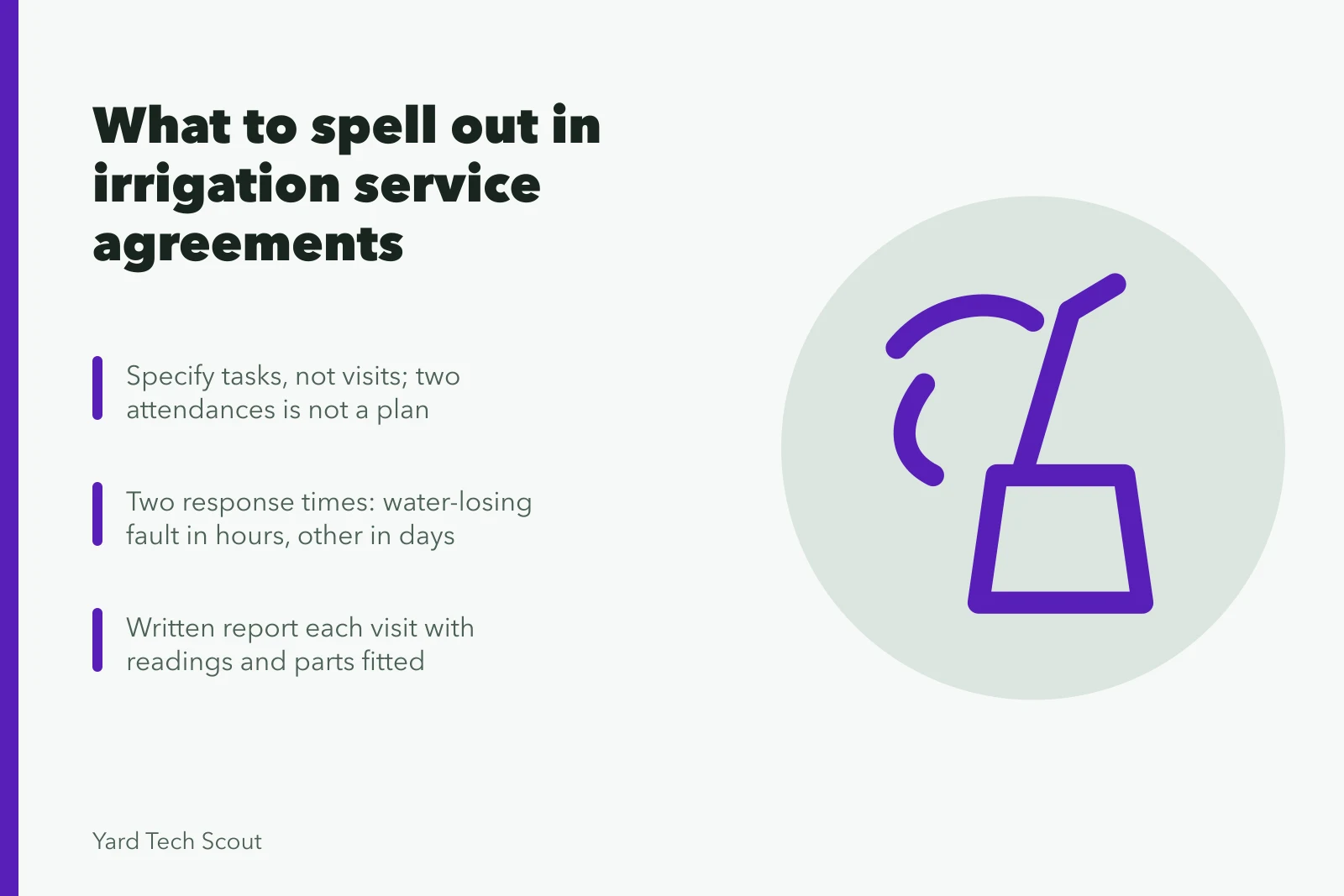
- Specify tasks, not visits. Two attendances a year with no task list is not a service plan.
- Put response times in the agreement, separately for faults that waste water and faults that do not.
- Require a written report after every visit, with readings and parts fitted.
- Review the price and the scope annually, and reprice against the same task list.
What the agreement should list
| Visit | Tasks that should be named |
|---|---|
| Spring start-up | Slow pressurization, zone-by-zone inspection, catch test, schedule set |
| Midseason check | Head and nozzle condition, pressure reading, controller and sensor test |
| Autumn adjustment | Seasonal reduction confirmed, restrictions setting checked |
| Winterizing | Isolation, drainage or blowout, controller set to off or rain mode |
| Any visit | Written report, readings, parts fitted, faults deferred and why |
Why the task list matters more than the schedule
Different properties need different service, so a generic plan underserves somebody.
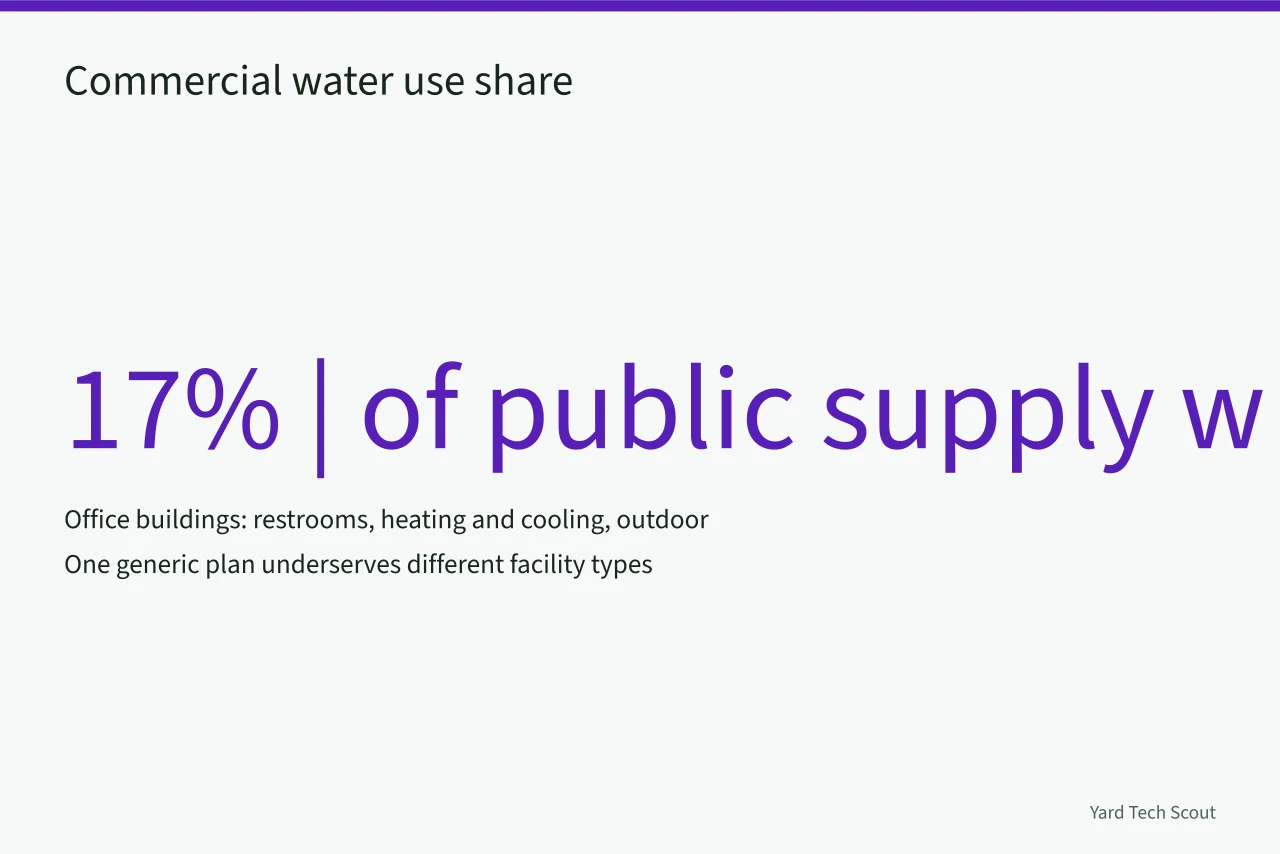
EPA's breakdown of water use by facility type shows the commercial and institutional sector accounts for 17 percent of withdrawals from public water supplies. Each facility type has its own water use pattern; office buildings' three largest uses are restrooms, heating and cooling, and outdoor irrigation.
A service plan built for a small suburban lot is not the plan a mixed-use property needs. A supplier offering one plan for every client is telling you something.
Why no single task fixes everything
Service agreements often get sold around one intervention, usually the controller, but agricultural practice says that is plainly wrong.
The USDA Natural Resources Conservation Service's overview of targeted water initiatives states no single practice is a silver bullet for water quality. Results come from a system of practices. It cites national assessment findings that agricultural runoff is the leading cause of water quality impacts to rivers and streams.
Different scale, same logic: pressure, coverage, scheduling, and detection have to be maintained together or the weakest one sets the outcome.
Response times and escalation
Write two response times into the agreement: one for a water-losing fault, in hours or a working day, and one for a fault that is not, in days. Name the escalation contact when the first is missed.
Then record actual response times, because that record makes the annual review a conversation about evidence instead of impressions.
Reviewing it each year
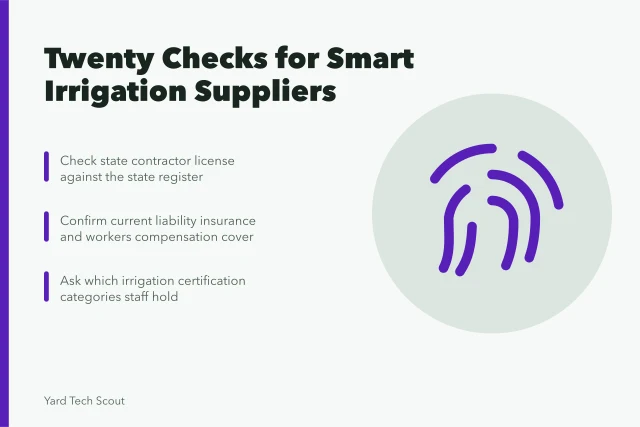
Reprice against the same task list rather than accepting a percentage increase on last year's total. Ask what was deferred and why. Ask whether the zone map and settings on file match reality. Then compare the supplier's routine against the owner-side tasks in our seasonal maintenance plan, and re-score them against the twenty checks.
Common questions
How many visits does a home system need? Commonly two, a start-up and a winterizing, with a midseason check where the system is large or the season is long.
Should the plan include parts? Usually not, and it should include labor for fitting them and a price list for common items.
What if the same fault keeps recurring? Ask for the cause in writing. A recurring fault is usually a design problem being managed as a maintenance problem.
Can I do some of it myself? Yes. Split the task list explicitly, so nobody assumes the other party checked something.