Reviews
Part of Garden sensor systems, reviewed for 2027
Testing a garden sensor against a shovel, not just its own spec sheet
Check garden sensors against reality: dig beside the probe, compare against a second method, log conditions, and decide whether the readings change decisions.
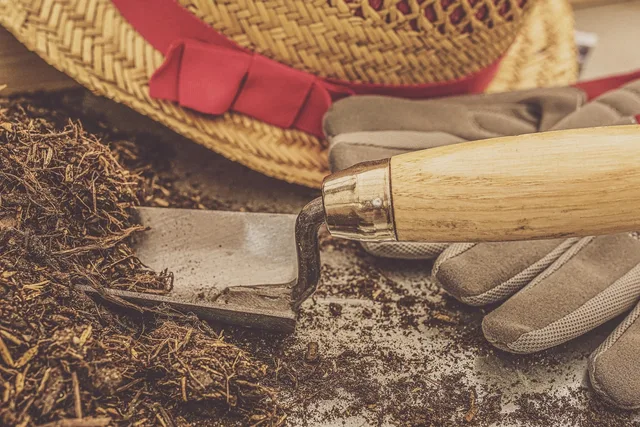
One test settles most arguments about a garden sensor: dig beside the probe with a trowel, then feel the soil at the probe's depth and compare it with what the app says. Repeat that on a wet day and a dry one.
Everything else is refinement: give the instrument something independent to check against, and write down what you saw.
What to take away
- Ground truth beats dashboards. Dig, look, and feel at the sensor's depth.
- Test at both extremes, because accuracy usually degrades where you most need it.
- One sensor plus one independent method is worth more than three sensors agreeing with each other.
- The real test is behavioraldid the reading change a decision, and was the decision better?
The dig test, done properly
Pick a day after watering and a day at the dry end of the cycle. Each time, dig a small hole 6 to 12 inches from the probe, down to the probe's depth. Record what the soil looks and feels like alongside the reported value.
You are checking three things: whether the probe sits in the horizon you think it does, whether the reading tracks reality in the same direction, and whether the gap between wet and dry readings is large enough to act on.
Layering in that hole is the point. The USDA Natural Resources Conservation Service's soil horizons description explains horizons differ in color, texture, structure, and thickness. Most soils have a surface horizon, a subsoil, and a substratum.
Identifying horizons is how soil is classified and interpreted for use. If your probe crosses a boundary between horizons, it averages two different materials, making readings hard to interpret.
Give the instrument something to be checked against
| Sensor | Independent check |
|---|---|
| Soil moisture | Trowel test, plus plant response over three days |
| Rain gauge | A second gauge in a clear location |
| Weather feed | Your own gauge and thermometer during one storm |
| Flow meter | Water meter reading over a timed run |
| Freeze alarm | A cheap min-max thermometer at plant level |
Public data can widen the check. EPA's list of data, models, and technical resources for watershed work points to national sources. These include USGS water resources data covering roughly 1.5 million sites, the Water Quality Exchange and its retrieval portal, and a public tool for looking up the condition of local waters.
It is aimed at watershed practitioners rather than gardeners. It is also a reminder that regional reference data exists and is free when you want to sanity-check a device that claims to know your conditions.
Keep a log that can be argued with
Three columns suffice: date, what the sensor said, what you found or did, plus weather in a word. After six weeks, the log answers the only question that matters: did readings change anything?
If every entry ends with the same action you would have taken anyway, the sensor is decoration and belongs somewhere it might be more useful.
Faults that survive this testing are usually maintenance faults rather than product faults, so work through the routine in our sensor upkeep plan, and re-check placement against the guidance in our comparison of sensor types.