
Costs
Part of What genuine smart yard case studies teach, once the marketing is stripped out
Smart yard case studies show whole-property upgrades beat single products
Documented smart yard projects show whole-property upgrades beating single products, with costs, staged spending and the public financing routes behind them.
What to take away
Smart yard case studies documented by public water programs show whole-property upgrades beating single products, with costs and staged spending attached. They are the closest thing this field has to evidence about money. As of 2026, a shared irrigation retrofit typically runs $10,000 to $50,000, depending on zone count, pipe condition, and whether turf comes out.
Larger shared work is financed rather than bought outright. Documented projects repeat the same lessons:
- Savings in every documented project came from a combination of measures, never one device.
- Every program pays per measure, so budget the full scope and treat the rebate as one line in it.
- Public financing for shared grounds runs through state revolving funds, which lend to utilities and municipalities, not usually to an individual association.
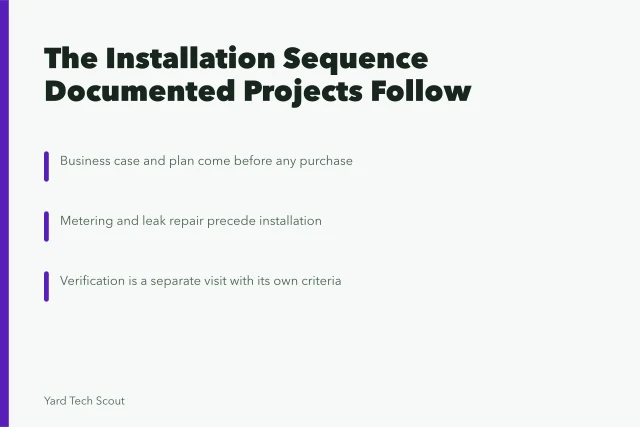
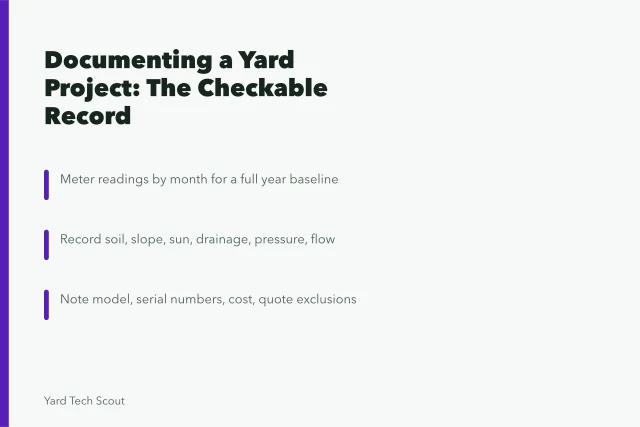
- A proposal needs a metered baseline, itemized scope with exclusions, two comparable quotes, and the recurring cost after handover.
Five documented smart yard projects
EPA WaterSense labeled homes. EPA certifies new homes that meet a water-efficiency standard. Its why labeled homes matter page says these homes cost less to live in than typical homes and save more than installing water-efficient products alone. EPA calls the program the largest body of verified whole-property results in North American water use.
Whole-Property vs Single Products
Whole-property
- Water savings
- 20% less
- Annual gallons
- 50,000 saved
- Verification
- EPA label
- Cost to live
- Lower
Single products
- Water savings
- Less than whole
- Annual gallons
- Not verified
- Verification
- None
- Cost to live
- Typical
A labeled home is certified to use at least 20 percent less water than a typical home. EPA estimates a household can save about 50,000 gallons a year. The claim that matters to a buyer is that a verified whole-home approach beats a collection of individually efficient purchases.
Total project cost: the home's construction price, set by the builder. No rebate attaches to the label. The label is the documentation.
San Antonio Water System commercial irrigation audit program. SAWS pays a certified auditor to inspect a property's irrigation zones, then requires repairs before any rebate is paid. The program covers commercial accounts in San Antonio.
A private audit typically costs $500 to $1,500 in most markets. Total project cost with valve, pressure, and controller work typically runs $2,500 to $9,500 on a commercial site. Zone count and pipe condition drive the total.
Metropolitan Water District of Southern California turf replacement program. This SoCal Water$mart program pays a rebate per square foot of lawn removed. The rate is typically $2 per square foot, with local agencies sometimes adding more. It requires a pre-inspection and a post-inspection, and pays after the conversion is verified.
Homeowners and shared properties both apply. It changes the plant load the irrigation system was sized for, so it is a whole-property measure by definition. A 1,000-square-foot conversion can draw about $2,000 before local add-ons.
Total project cost: removal and replanting typically run $2 to $5 per square foot, so the same 1,000 square feet costs $2,000 to $5,000 before the rebate. The owner's share typically lands between $0 and $3,000.
Southern Nevada Water Authority's Water Smart turf rebate. SNWA pays a rebate for replacing grass with desert plants. The rate is typically $3 per square foot, with caps per property per year. It requires pre-approval and a post-inspection. For a 1,000-square-foot lawn, that is about $3,000.
The program covers residential and commercial properties in the Las Vegas area. Total project cost: removal and desert replanting typically run $2 to $4 per square foot, so a 1,000-square-foot yard totals $2,000 to $4,000 before the rebate. The annual cap can spread a larger property over several years.
Seattle Public Utilities RainWise rebate program. RainWise pays rebates for rain gardens and cisterns that manage roof runoff on private property. Rebates are typically up to $4,000 per project, and the program requires a site inspection before work starts.
It suits homeowners and shared properties in eligible Seattle neighborhoods. The measure changes the property's stormwater load, so it is a whole-site upgrade rather than a single device. Total project cost: a rain garden typically runs $3,000 to $8,000 installed, and a cistern system typically runs $5,000 to $12,000. The rebate covers part of either.
Each program pays for a package or a sequence, not a lone device. San Antonio requires repairs before rebate. The turf programs pay per square foot after verification. WaterSense certifies the whole home. RainWise pays for a site-specific stormwater measure. None of these is a product review. Each one is a project with a before-and-after number attached.
A worked case with before and after figures
SoCal Water$mart turf conversion, 2,000 square feet of shared frontage. This project is priced from the program's published rate and common contractor costs, so the figures are typical rather than a quote for a specific address.
Before: four spray zones covering 2,000 square feet of tall fescue, mismatched nozzles, no pressure regulation, and no shutoff at the meter.
After: the same 2,000 square feet in low-water plantings on drip, pressure-regulated, behind a shutoff valve and a smart controller.
Cost figures: removal and replanting run $2 to $5 per square foot, so the work totals $4,000 to $10,000. The rebate at $2 per square foot is $4,000. The owner's share typically lands between $0 and $6,000.
Water figures: the program pays per square foot because the conversion cuts that area's outdoor use, typically by 30 to 50 percent.
Where the money for shared systems comes from
Larger shared work is usually financed, and the routes are public. EPA's collection of funding resources for watershed protection explains the Clean Water State Revolving Fund, a federal-state partnership giving communities low-cost financing for water quality infrastructure.
Shared Retrofit Financing
- $10,000–$50,000Typical shared irrigation retrofit
- 51State-level funding programs
- 2Federal-state revolving funds
The Drinking Water State Revolving Fund does the same for Safe Drinking Water Act objectives. Both can address priority nonpoint source needs, and a best practices guide covers the 51 state-level programs.
Those programs serve communities and utilities rather than individual associations. The point for a board is directional: ask your state water agency what exists before assuming a capital project must come entirely from reserves.
What the projects consistently report
| Reported pattern | What it implies for a budget |
|---|---|
| Metering and repairs preceded the hardware | Fund both before any device |
| Combined measures outperformed single ones | Do not fund one device and stop |
| Ongoing management sustained results | Budget the recurring service, every year |
| Documentation enabled the claim | Budget somebody's time to keep records |
Turning it into a proposal
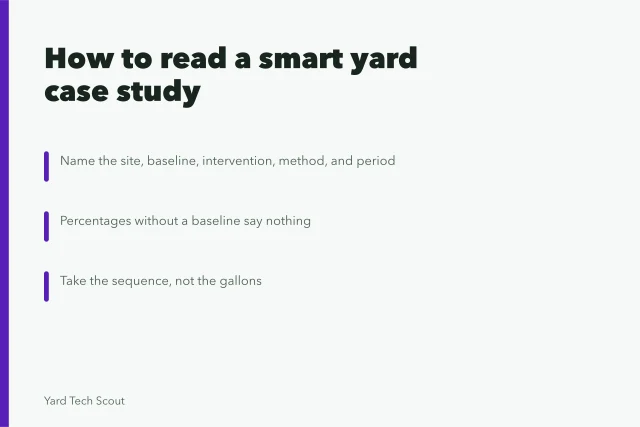
Present a board with a metered baseline, an itemized scope with exclusions, at least two comparable quotes, and the recurring cost after handover.
A metered baseline typically costs $200 to $800. An irrigation audit typically costs $500 to $1,500. A smart controller typically costs $150 to $300 installed. A drip retrofit typically costs $0.50 to $1.50 per square foot. Turf rebates typically pay $2 to $3 per square foot, with caps.
Lay it out in our price guide so this year's proposal can be compared with next year's line by line. Hold your own figures to the standards in our guide to reading case studies.
Common questions
Can a homeowner association access state revolving funds?
Usually not directly. The borrowers are utilities and municipalities, so ask your state water agency what applies to your situation. Treat any capital plan as reserve-funded until an administering office tells you otherwise.
Is a whole-property approach affordable in stages?
Yes. Work can be split across budget years, and SNWA caps its turf rebate per property per year, so a large conversion may have to be staged anyway.
Why do documented projects report better results than owners do?
Because they wrote down a baseline and kept managing the system afterwards. Their equipment was often ordinary. The difference is the record keeping and the management, not the brand on the controller.
What is the cheapest thing a board can do this year?
Read a year of bills, book an audit, and put the results in the minutes. That costs one meeting and gives every later proposal something to be measured against.