Reviews
Part of What genuine smart yard case studies teach, once the marketing is stripped out
Renters with a small yard: lessons borrowed from documented projects
What documented small-scale projects show renters and small-plot gardeners: protected growing, roof planting, and which findings transfer to a balcony or yard.
Documentation for small plots exists, but not where most people look. Almost none covers balconies. It comes from protected growing structures, roof planting, and urban production, small-footprint systems studied because somebody funded the study.
This article takes what transfers to a rented courtyard or a small yard, and is honest about what does not.
What to take away
- Small-footprint documentation exists in protected growing and roof planting, not in consumer product literature.
- Controlled environments make precise water delivery both possible and necessary, which is the most transferable finding.
- Structural limits are the binding constraint on any roof or balcony planting, and they are not negotiable.
- Findings about yield and season length transfer poorly. Findings about method transfer well.
Protected growing, and what it teaches a small plot
High tunnels are the most widely documented small-footprint structure in American horticulture. The USDA Natural Resources Conservation Service runs a high tunnel initiative supporting the practice, commonly called a hoop house. It extends the growing season, improves plant and soil quality, reduces nutrient and pesticide transport, and cuts energy use through local supply.
One detail matters most for a small plot: a high tunnel keeps direct rainfall off plants, so growers use precise tools like drip irrigation to deliver water and nutrients efficiently.
The same logic applies to a covered balcony, a courtyard under an overhang, or a plot beneath a large tree. Where rain does not arrive, delivery has to be deliberate.
The program is for agricultural producers, so a renter will not be applying to it. The practice description is public and is a better source than most retail material.
Roof planting, where the constraint is structural
Roof and terrace planting is documented, with a warning no product page emphasizes. EPA's archived summary of green roofs describes a plant layer that absorbs water like a sponge.
It captures rain and releases it slowly through evaporation and plant use, reducing runoff from an otherwise impervious surface. The page also notes reduced building energy use and noise, and increased roof lifespan.
It also states the constraint plainly: structures must be able to support the loading of green roof materials under fully saturated conditions. The page carries an EPA notice that the section is no longer being updated, so use current engineering guidance for anything you build.
Saturated weight is the number to ask about before anything else, and the person to ask is a structural engineer or the building owner, not a supplier.
What transfers, and what does not
Transfers to a small plot
- Precise delivery where rain is blocked
- Yes
- Structural loading limits
- Yes, absolutely
- Season extension figures
- Partly
- Yield and productivity numbers
- No
- Cost per square foot
- No
Why
- Precise delivery where rain is blocked
- Same physical situation
- Structural loading limits
- Same physics, smaller scale
- Season extension figures
- Depends on climate and structure
- Yield and productivity numbers
- Different crops, scale, and management
- Cost per square foot
- Commercial construction, not a balcony
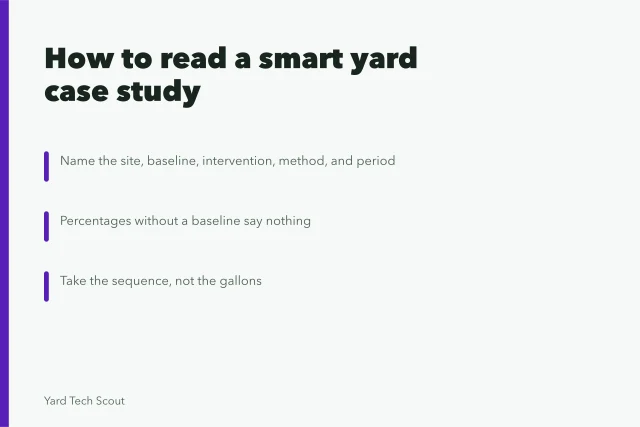
Combine this with the hardware choices in our note on reversible options for renters, and read documented material with the method described in our guide to reading case studies.