Reviews
Part of Reading smart yard technology with a sceptical eye, 2027 edition
Smart Yard Technology for Renters: A Reversible Water Path
Smart yard technology for renters starts with a reversible water path: surface drip, a battery hose-end timer, simple alarms, and cautious rain-barrel use.
For smart yard technology on a balcony or in a rented courtyard, the water path matters more than the controller. Where the water lands, where it comes from and what happens when a fitting fails decide the result. All three can be handled without anything permanent, and that rules out trenching, buried valve boxes and hard-wired transformers, but not automation.
What to take away
- Drip beats spray on a small plot, because spray on a small area wastes most of its water on hardscape.
- A battery hose-end timer, a filter and a regulator feed surface tubing and drippers, and all of it comes out with the tenant.
- Stored roof water suits ornamentals and needs more thought before it touches anything edible.
- Get written permission for anything attached to the building, including a hose bib splitter left in place through winter.
Delivery: drip instead of spray
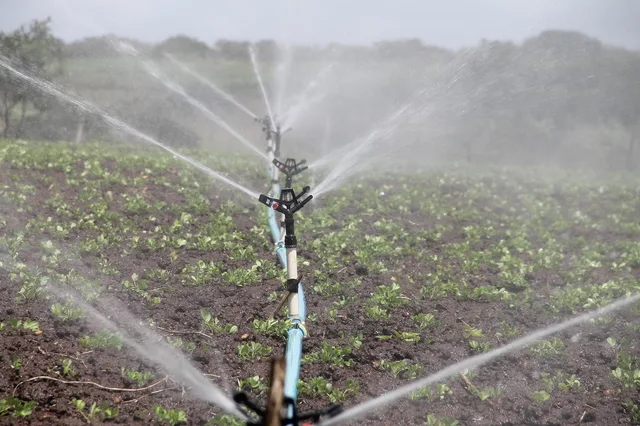
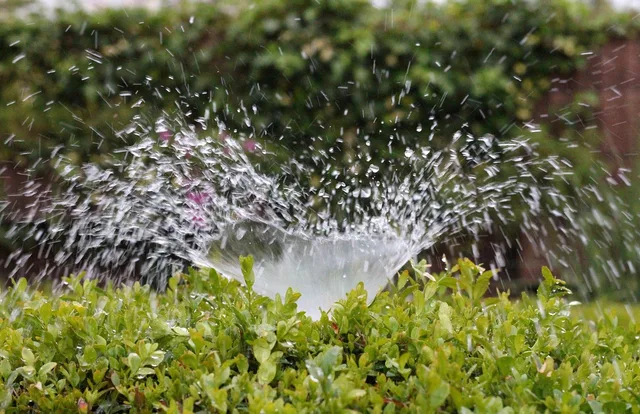
Microirrigation delivers water slowly at the root zone instead of throwing it across an area, which suits a small plot. Drip and micro-spray both fall under that term, and either one beats a spray head aimed at a patio.
EPA's overview of microirrigation describes low-pressure, low-flow delivery that cuts runoff and evaporation. Such systems use 20 to 50 percent less water than conventional sprinklers, and a home that installs one instead of a traditional system can save more than 25,000 gallons a year.
In a container garden the proportional saving is larger, because a spray head aimed at pots also wets the patio. A battery hose-end timer with a filter and a pressure regulator, feeding quarter-inch tubing and drippers sized per pot, is the whole system for many balconies.
It installs in an afternoon and lifts out at the end of a tenancy. The purchase order and the portable-versus-permanent lists are in what to buy first.
Sensing and alarms that earn their place
Small volumes dry out fast, so timing errors show up in days rather than weeks. Four additions are worth considering, listed in order of payoff.
- A soil moisture probe in the largest or fastest-drying container, used to set the schedule rather than to run it.
- A rain shutoff or a simple manual skip, since a balcony under a deep overhang may get no rain at all while the forecast says otherwise.
- A freeze alert if any tubing stays outdoors through winter.
- A leak or flow alarm on the bib if the water bill is shared with neighbors.
The last two protect against costs you did not cause: tubing that has frozen over winter, and a water bill that includes the neighbors. Both can be settled with a small device and a written agreement.
Stored rainwater and the limits on it
Collecting roof runoff in a barrel cuts what leaves your property and supplies water that never appears on a bill. It suits ornamentals well, and edible plants need more thought.
EPA's archived guidance on rain barrels explains how barrels and larger cisterns work, and repeats a warning. Rain flowing over a roof can pick up bacteria from birds and other animals, plus chemicals from roofing material. Weigh that before using barrel water on edible plants.
That page carries an EPA notice that the section is no longer updated, so treat it as background and confirm current guidance with your state or county before relying on it.
The water path, checked against the lease
The table lines up each part of the water path with the question to put to the landlord, because every part touches something the landlord owns.
| Part of the path | Reversible choice | Question for the landlord |
|---|---|---|
| Delivery | Surface tubing and drippers | May anything be fixed to the wall or rail? |
| Timing | Battery hose-end timer | May a device stay on the outdoor spigot? |
| Protection | Flow alarm on the bib, freeze alert | Who pays if a fitting fails? |
| Source | Rain barrel at a downspout | May it be attached, and removed later? |
Ask in writing, and read the building rules before buying anything that attaches. Photograph the spigot before and after. If the property is metered per unit, a small flow alarm protects you from a bill you did not cause.
For the wider picture, the overview of what the category covers sets these choices beside the rest of the yard.
Common questions
Can I automate without an outdoor outlet?
Yes. Battery timers and battery sensors are the norm on balconies, and solar trickle chargers exist for longer runs.
Will a landlord object to drip tubing?
Usually not, because it lies on the surface and lifts out. The objection is normally about drilling or about water sitting against a wall.
Is a controller worth it for six pots?
A timer is. A full networked controller is rarely worth the cost until you have separate zones with different needs.
Can I take the system with me?
That is the point of choosing reversible hardware. Keep the original fittings so the spigot goes back exactly as you found it.