Guides
Smart irrigation planning: measure demand, hydrozone, then set run times
A step by step smart irrigation plan: measure how much water the planting needs, group plants by demand, fix hardware, then automate the schedule.
Smart irrigation fails in a predictable order. Someone buys a controller, wires it to the same valves feeding the same badly aimed heads, accepts the default schedule, then judges the technology by a result the technology never controlled.
Planning fixes that by putting measurements first and the device last. This is the sequence, from the first question to the first automated week.
What to take away
- Decide how much water the planting needs before deciding how a controller will deliver it.
- Group areas by demand. One schedule across sun, shade, turf, and shrubs guarantees that something is wrong somewhere.
- Measure your own output with a catch test rather than trusting a nozzle chart.
- Your utility, not the app, is the authority on how much and when you may water.
Step one: work out the demand
EPA's watering guidance gives a starting figure of about one inch of water a week including rainfall. The real number varies with location, recent weather, and the plants themselves, so it recommends asking your local water utility or Cooperative Extension office for regional advice.
Catch test in four moves
- Set empty cans around the area
- Time sprinkler to half an inch
- Water that long twice a week
- Adjust from what you see
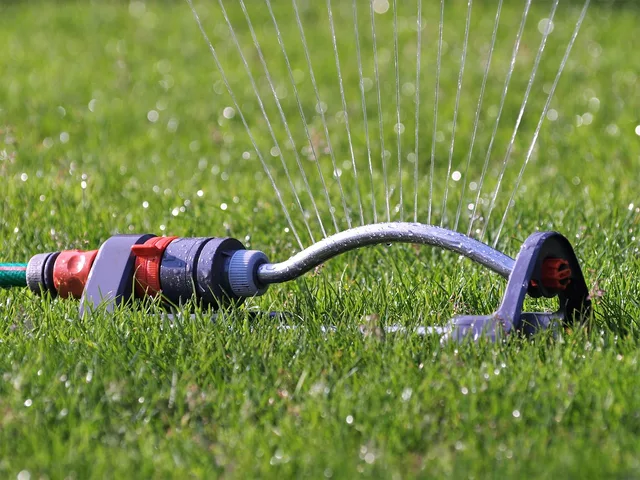
The same page describes a simple output test: set a few empty cans around the area. Time how long the sprinkler takes to put half an inch in them, then water that long twice a week and adjust from what you see.
It also warns that clay-rich or sloped soil will pool if water arrives faster than it can soak in. Cycle-and-soak is for that.
That test takes twenty minutes and tells you more about your system than any product page.
Step two: group by demand, not by geography
A hydrozone is a set of plants with similar water needs, sun exposure, and soil grouped onto one valve. Zones drawn by convenience instead of demand are the single most common design fault.
Plant choice belongs in this step too. EPA's plant selection resource points readers to state and regional plant lists and advises choosing species defined as low water use or drought tolerant for the area, after checking your USDA plant hardiness zone. Reducing demand is cheaper than automating a demand you did not need to create.
Step three: put the hardware in order
| Order | Task | Why it comes here |
|---|---|---|
| 1 | Repair leaks and broken heads | Automation multiplies faults instead of hiding them |
| 2 | Correct spray direction and coverage | Water on paving is wasted regardless of schedule |
| 3 | Check pressure and add regulation | High pressure atomizes spray and inflates flow |
| 4 | Set zone run times from the catch test | Gives the controller a correct starting point |
| 5 | Install the controller and sensors | Now the device can improve something real |
The full list of questions to put to a supplier or contractor before any of this is priced is in our guide to what to ask before buying.
Step four: run it, then leave it alone
Give the new schedule two weeks before judging it, then walk each zone once in that period at the hour it runs, noting dry corners, pooling, and any head coming up late, and adjust one variable at a time.
Then write the seasonal plan down. A spring schedule still running in October is the second most common failure. Our seasonal maintenance plan lists what to check and when.
Common questions
Do I need separate zones for lawn and shrubs?
How do I know my controller is using good weather data?
Can I water at night?
What if my area has watering restrictions?
In this guide
- Real smart irrigation vs an app bolted onto a garden-store timerThe questions that separate a smart irrigation system worth buying from one that just adds an app: certification, sensor inputs, support, and offline behavior.
- Four home tests to check how well your smart irrigation is workingRun four checks at home using your meter, sprinkler cans, storm response, and water bill to see how well a smart irrigation controller works.
- Smart irrigation maintenance: what to check and whenA practical smart irrigation maintenance plan: pressure checks, seasonal schedule changes, sensor testing, winterizing, and what to record each time.
- Where smart irrigation privacy concerns appear: rebate files, plans, metersWhere smart irrigation privacy concerns appear: a rebate file, a provider's plan, a published case study and meter data, with one real rebate as the example.
- Smart irrigation for the careful reader: the 2027 viewThe smart irrigation product types worth comparing in 2027, what each one is for, which carry a federal label, and how to shortlist without brand rankings.