Industry
Part of 4 Pointers for Robotic Yard Equipment on Lawns
Robotic yard equipment reviewed: what holds up and what does not
Husqvarna, Worx and Segway robotic mowers and their rivals, judged on boundary systems, slope limits, battery design and the repairs owners actually pay for.
What to take away
- Wire-guided mowers from Husqvarna, Stihl and Ambrogio are the models owners keep running. The RTK group from Segway, EcoFlow and Mammotion is abandoned first, mostly under tree cover.
- Wheel motors, boundary wire and blades fail before the drive unit does. The battery is the cost owners notice most.
- Repairs beyond the battery typically run $150 to $400 per incident. Treat every figure here as a typical range, not a quote.
- Slope rating and lawn shape predict satisfaction better than price.
- An owner verdict needs a full season and a measured figure.
Which robotic mowers hold up in owner use
Owner experience points to one rule. A mower tied to boundary wire and sold through a dealer keeps working. A mower that fixes its position by satellite alone does not, once a roof line or a tree stands in the lawn.
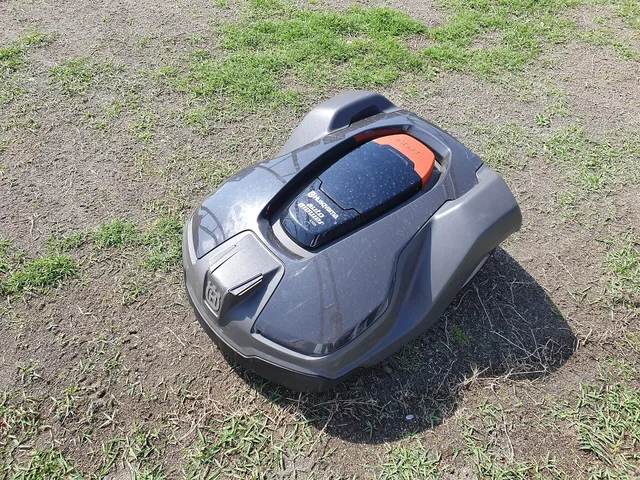
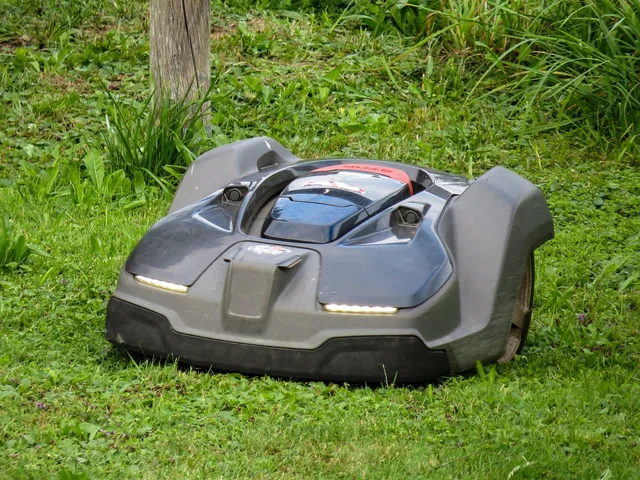
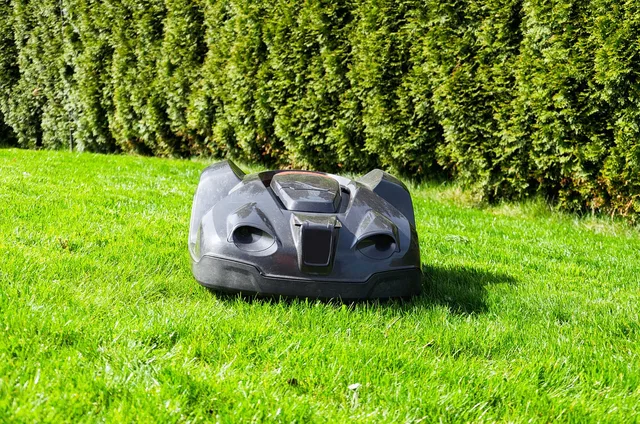
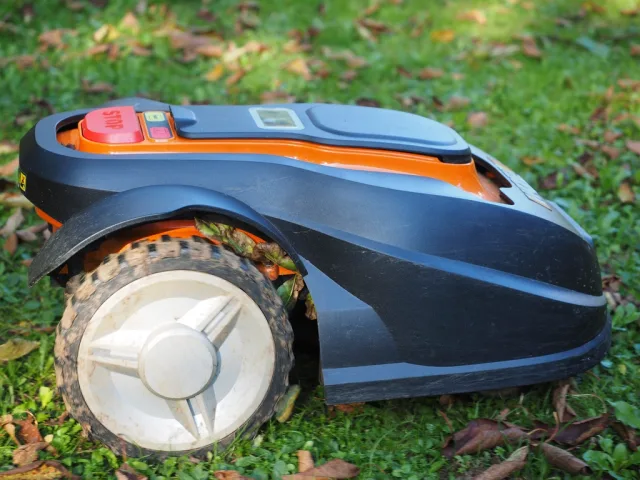
Husqvarna's Automower 430X is the reference. It lists a 45 percent slope limit, sells for about $3,000, and runs on wire with dealer service in Canada and the United States.
Stihl's iMow RMI 632 P follows that dealer model at near $3,500, also rated to 45 percent. Ambrogio's L85 Elite reaches 60 percent and suits terraced ground above $5,000.
Worx's Landroid WR140 is the value pick at roughly $800, cutting about a quarter acre inside a wire boundary.
The wire-free group is where patience runs out. Segway's Navimow H500E costs about $1,200 and uses RTK positioning. EcoFlow's Blade sells near $2,900. Mammotion's LUBA 2 AWD 5000 claims a 75 percent slope limit at about $3,000. All three need open sky.
Slope, soil and drainage matter more than the spec sheet. Our 4 pointers on robotic yard equipment that hold up covers the setup decisions that separate a calm owner from a frustrated one.
| Model | Boundary system | Slope limit | Battery | Typical price |
|---|---|---|---|---|
| Husqvarna Automower 430X | Wire | 45% | Replaceable | $3,000 |
| Stihl iMow RMI 632 P | Wire | 45% | Replaceable | $3,500 |
| Ambrogio L85 Elite | Wire or GPS | 60% | Replaceable | $5,000+ |
| Worx Landroid WR140 | Wire | 35% | Replaceable | $800 |
| Segway Navimow H500E | RTK, no wire | 27% | Replaceable | $1,200 |
| EcoFlow Blade | RTK plus LiDAR | 27% | Replaceable | $2,900 |
| Mammotion LUBA 2 AWD 5000 | RTK plus camera | 75% | Replaceable | $3,000 |
[figure 1]
Robotic mower models compared
Husqvarna 430X
- Price
- $3,000
- Slope limit
- 45%
- Boundary
- wire
- Service
- dealer
- Best lawn
- irregular, obstacles
Worx WR140
- Price
- $800
- Slope limit
- not listed
- Boundary
- wire
- Service
- hardware retail
- Best lawn
- simple, quarter acre
Segway H500E
- Price
- $1,200
- Slope limit
- not listed
- Boundary
- RTK wire-free
- Service
- app
- Best lawn
- open, clear sky
Mammotion LUBA 2
- Price
- $3,000
- Slope limit
- 75%
- Boundary
- satellite wire-free
- Service
- app
- Best lawn
- open, clear sky
What gets abandoned first
Published parts diagrams show what the maker expects to wear out: batteries, wheel motors, blade discs, charging contacts and boundary-wire connectors. Those are listed spares. Control boards usually are not.
The machines owners stop rescuing are the wire-free units that lose their satellite fix. Segway Navimow, EcoFlow Blade and Mammotion LUBA all depend on that lock.
Between tall buildings or under dense canopy, the lock drops. The machine then stalls or cuts a ragged line. Worx's camera-only Landroid Vision, about $1,500, marks the lawn poorly in low light.
Cold shortens the season and stresses the hardware. Canadian owners check frost dates on the Government of Canada's weather services hub before setting a cutting calendar. The general account of robotic mower capabilities notes the same cold-weather limits on charging and traction.
Many stalls trace to installation rather than hardware. Our roundup of what owners report after a season of outdoor automation collects the setup faults that recur.
What repairs cost beyond the battery
Battery packs for wire-guided mowers typically run $100 to $200. Owners quote that figure most, because capacity fades slowly.
Ask two questions before buying. Is the pack a listed spare part, and what does a wheel motor cost? The second answer is rarely printed on the box.
[figure 2]
Battery replacement cost
- $100 to $200replacement pack for wire-guided models
- worst-reported figurebattery life
- listed spare partwhat to ask before buying
| Part or service | Typical range, US and Canada |
|---|---|
| Battery pack, wire-guided models | $100 to $200 |
| Wheel motor, each | $150 to $300 |
| Boundary wire repair kit | $25 to $80 |
| Blades and blade disc, per season | $30 to $90 |
| Dealer bench or call-out rate | $75 to $150 per hour |
Those are typical ranges, not quoted prices, and warranty status moves the bill either way.
Our 5 things to weigh up on robotic yard equipment covers the installation errors that turn a cheap machine into an expensive one.
Example: four questions that sort a real owner report from a first-month impression
Anyone can ask an owner, but few ask in a way that produces a usable answer.
- What was measured? Hours run, rescue trips per week, blade changes per season.
- Over what period? One full season at minimum, never a first month.
- What else changed? New irrigation, reseeding, a different cutting height.
- Would you buy it again? The only question that survives marketing.
A report naming the model, the season length, the rescue count and the parts replaced is evidence. Anything shorter is an impression.
Yard robots beyond mowers
Mowers are one product in a wider yard robot market, and the rest is easier to justify. Smart irrigation controllers are judged against published criteria, including weather-based scheduling and a soil moisture override. The EPA's irrigation controller criteria sets them out.
Sensors and controllers cost less than a mower and fail more gently. If a mower is your first purchase, our guide to planning a smart yard setup explains how to leave room for them without a rebuild.