
Guides
Part of Yard technology failures: four repeating patterns and checks that catch them
Yard technology mistakes: planning for water and faults
Plan around yard technology mistakes by tracing runoff, checking source-water risks, designing visible fault warnings, and keeping a useful site record.
A setup that avoids repeating yard technology mistakes is built on two ideas: nothing is added until the underlying condition is understood, and every likely failure has a way of announcing itself. The mistakes worth designing against fall into a few recurring kinds: building before watching where the water goes, ignoring the drinking water source underneath, burying faults where nobody sees them, and buying controllers that only work while a maker's cloud service stays online, apps that can be discontinued, or hubs that lock gear to one brand. This guide works through the water and fault side step by step; it does not rate products by name. None of it requires expensive hardware. It requires an hour outside in the rain and a willingness to write things down before shopping.
What to take away
- Walk the property during rainfall before designing anything that moves water.
- Avoid the repeat offenderscloud-only controllers, discontinued apps, brand-locked hubs, and dead application interfaces.
- Pick gear you can keep runninga WaterSense-labeled irrigation controller, a soil moisture sensor, and a robot mower with controls on the machine.
- Design so faults are visibleflow alarms, inspectable overflows, and labeled shutoffs.
- Know whether your site sits above or near a drinking water source, because that changes what belongs in the yard.
- Leave the record behind, so the next person does not solve the same problem twice.
Step one: watch the water before you touch it
Simplest planning exercise is most skipped. EPA's archived homeowner guidance on what you can do to soak up the rain opens with that instruction.
Storm Walk: Watch Where Water Goes
- Walk the yard during the next rain
- Note where water soaks in
- Note where it crosses the lawn
- Trace downspout flow to storm drain
- Decide what cuts runoff
- Repeat in light and heavy rain
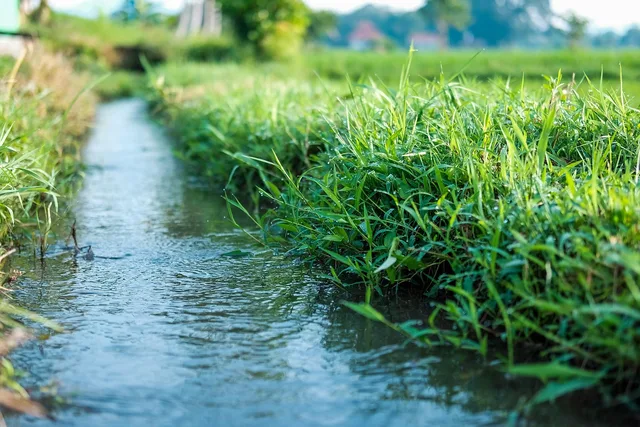
Next rain, walk, watch where water goes. It may soak in, cross a lawn, or run from a downspout down a driveway to a storm drain. Then decide what could cut runoff from the property. The same notes tell you where a soil moisture sensor belongs and which zones an irrigation controller should run separately.
It lists the usual responses: redirecting downspouts, capturing roof water, planting a rain garden, planting trees, reducing hard surfaces, and green roofs. The page carries an EPA notice that this section is no longer updated, so confirm current design guidance locally before building anything from it.
Do that walk twice, in a light rain and a heavy one. The heavy one shows you where the design has to work.
Step two: know what is downstream and underneath
Some yards sit where mistakes reach farther than a wet lawn. USDA Natural Resources Conservation Service says source water protection covers actions to safeguard rivers, streams, lakes, and reservoirs. It protects springs and groundwater that supply public drinking water systems and private wells.
Is Drinking Water Downstream?
Are you on a private well or in a wellhead protection area?
fuel, chemical, and runoff rules change
standard local design guidance applies
A 2018 Farm Bill provision directs the agency to identify local priority areas for drinking water protection in each state. It works with state technical committees and community water systems.
If you are on a private well, or inside a wellhead protection area, the calculus for storing fuel, applying chemicals, or infiltrating runoff changes. Your state drinking water program or county health department can tell you which applies.
Step three: design so failures speak
Design so failures speak
| Likely failure | Make it announce itself |
|---|---|
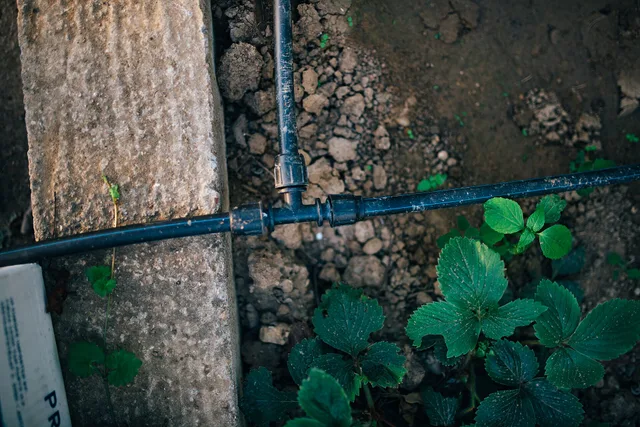
| Underground irrigation leak | Flow monitoring with an abnormal-use alarm |
| Blocked infiltration area | An overflow you can see, not a buried pipe |
| Seeping valve | Valve boxes you can open and inspect |
| Backflow device fault | Calendar reminder tied to the required test interval |
| Controller offline | A device that keeps a local schedule and says so |
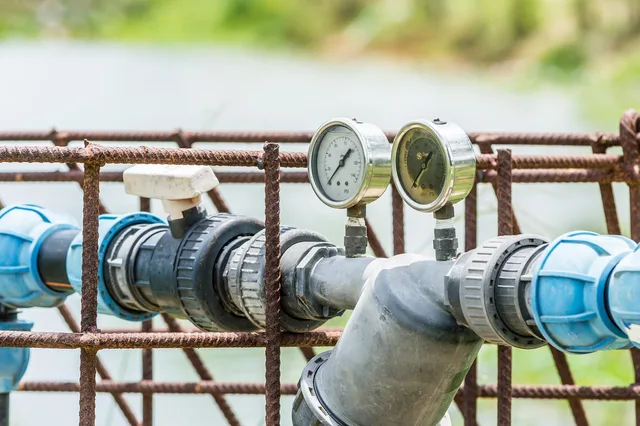
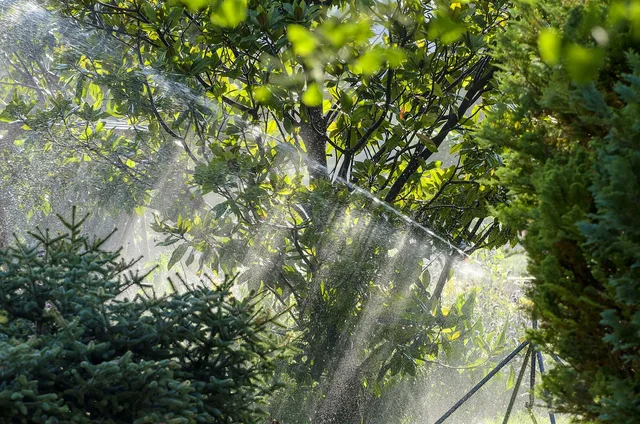
Failures like these are where smart gear earns its place. A WaterSense-labeled irrigation controller — EPA labels both weather-based and soil moisture-based models — resets its schedule as conditions change instead of running a fixed timer through a storm. A soil moisture sensor at the root zone tells you whether the water actually arrived. A robot mower with controls on the machine keeps cutting when an app is discontinued. Backflow testing runs on a different rule: the interval comes from your local water utility, and a certified backflow prevention assembly tester has to do the test and file the result. The Los Angeles County Waterworks Districts are a typical example: the customer is responsible for having an approved backflow prevention assembly installed and for having it tested on an annual basis by a certified tester, and the districts accept assemblies approved by the USC Foundation for Cross-Connection Control and Hydraulic Research. Check your own utility's cross-connection control rules before you add irrigation to a potable line, and put the test date in the calendar the day the assembly goes in.
Step four: leave the record
Keep a folder with the site sketch, storm-walk notes, zone numbers, model and serial numbers, and dated photographs. It stops the next project from starting blind. Our guide to planning a setup you can extend shows how to stage the work so the record stays useful, not just complete.
Reread the recurring failure patterns in our note on projects that went wrong before finalizing a design, and weigh each one against the gear you are about to buy.