Maintenance
Yard technology failures: four repeating patterns and checks that catch them
Four repeating yard technology mistakes: automating unfixed faults, treating symptoms, moving water, and skipping records, with simple checks and two EPA examples.
Projects fail in patterns. Across irrigation retrofits, lighting installs, pest control gadgets, and drainage work, the same four errors keep appearing under different product names. This article names them, and uses two cases where a federal agency has written down what goes wrong, because a documented case is worth more than a list of warnings.
What to take away
- Automating an unrepaired fault makes the fault regular rather than occasional.
- Treating a symptom on a timer is the most expensive way to not solve a problem.
- Water sent somewhere new becomes somebody's problem, and often it is yours.
- The failure that costs most is the one nobody notices.
Pattern one: the timer that treats a symptom
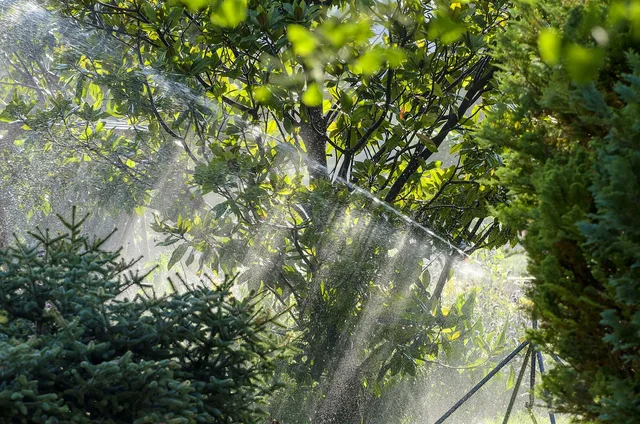
Outdoor residential misting systems are the clearest documented example of automation applied to the wrong layer of a problem. EPA's fact sheet on mosquito misting systems describes nozzles mounted around a home's perimeter, on the house or fence.
Tubing connects them to an insecticide supply, often triggered on a preset timer. It exists because information from advertisers and other sources is, in the agency's words, difficult to understand or conflicting.
The page explains whether the system fits at all, safety precautions, and integrated pest management alternatives. The lesson reaches beyond mosquitoes.
A device that applies a treatment on a schedule, with no feedback about whether the treatment is needed, is the archetype of a yard technology mistake.
Do this: Pick one treatment you run on a timer. For a week, apply it only when a check shows the problem is present. If the result looks the same, the timer is doing nothing.
Pattern two: the fault nobody sees
An irrigation break at 4am, a seeping valve, a light circuit drawing current into a shorted fixture: these cost money continuously and announce nothing.
Detection is cheap relative to what it catches.
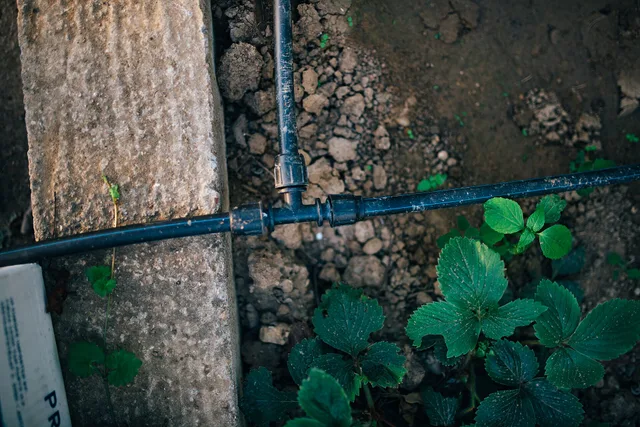
Do this: Put one detector where a hidden fault would cost most. A flow meter on the main line or a leak sensor at the valve box is the usual first choice. Read it once a month.
Pattern three: moving a problem downstream
Changing where water goes is the most consequential thing a yard project does. EPA's overview of nonpoint source pollution explains nonpoint source pollution comes from rainfall and snowmelt moving over and through the ground. Runoff picks up pollutants and carries them into lakes, rivers, wetlands, coastal waters, and groundwater.
EPA lists excess fertilizers, herbicides, and insecticides from residential areas among the sources. It records that states report nonpoint source pollution as the leading remaining cause of water quality problems.
Redirecting a downspout, regrading a bed, or adding a drain is not a neutral act. Watch the new path in a real storm before calling the work finished.
Do this: Photograph the outlet of any new drain or regrade during the first heavy rain. Note where the water lands and who owns that ground.
Pattern four: no baseline, so no lesson
No baseline, no lesson
| Missing record | Consequence |
|---|---|
| Meter reading before the work | No measured starting point, so a saving or a new leak cannot be proved. |
| Date and weather at each reading | Two readings cannot be compared, because the gap may be weather and not the work. |
| Zone map or valve layout | A fault shows as a loss for the whole system, with no way to trace it to one zone. |
| Outlet photo from a storm | A runoff complaint or a flooded neighbor cannot be answered with evidence. |
Records to keep before work
- Meter reading before the work
- Dated photographs
- Written scope with exclusions
- Zone map and settings
- Maintenance log
Do this: Record these four fields at every reading, before and after the work.
No baseline, no lesson
- Meter reading
- Date and time
- Weather in the previous 24 hours
- Zone or valve the reading covers
Applying the lessons
Fix, then measure, then automate, then extend. Detect before you optimize. Watch water before you move it. Write things down while they are still true. The specific failure lists are in our notes on automation mistakes that add cost and on robotic equipment mistakes, and both are worth reading before the next purchase rather than after.
Common questions
Is any automated treatment a mistake?
How do I know if I have an unseen fault?
What is the cheapest lesson here?
Where do I check local rules on runoff?
In this guide
- Yard technology mistakes: prevention vs monitoring vs full automation comparedYard technology mistakes prevention vs monitoring vs full automation compared on real gear, with what each approach costs and what each one misses.
- Yard technology mistakes: planning for water and faultsPlan around yard technology mistakes by tracing runoff, checking source-water risks, designing visible fault warnings, and keeping a useful site record.
- Yard technology mistakes that experienced operators still makeExperienced installers still misread registration, modeled ratings and coverage figures, and still bury sensors where a shovel cannot reach them.
- Yard Technology Mistakes: Five Site ChecksYard technology mistakes can start before installation. Five site checks cover utility locates, tree roots, backflow, septic areas, and handover.