Guides
Soil Moisture Sensor vs Tensiometer: Which One for Clay?
Soil moisture sensor vs tensiometer in clay: what each instrument measures, where calibration breaks down, and which one earns a place in a scheduling plan.
What to take away
- On clay, a tensiometer tells you when to irrigate. A volumetric water content sensor tells you what the soil holds right now.
- Clay shrinks and swells, and that movement breaks tensiometer contact. Slurry installation and a mid-season check are not optional.
- Factory calibration on a capacitance sensor assumes a generic mineral soil. Expect a texture-specific offset in heavy clay.
- Neither instrument maps a root zone. One probe reads a few cubic inches.
- Pick the tensiometer for a decision rule. Pick the volumetric sensor for a trend and remote checks.
What is being compared
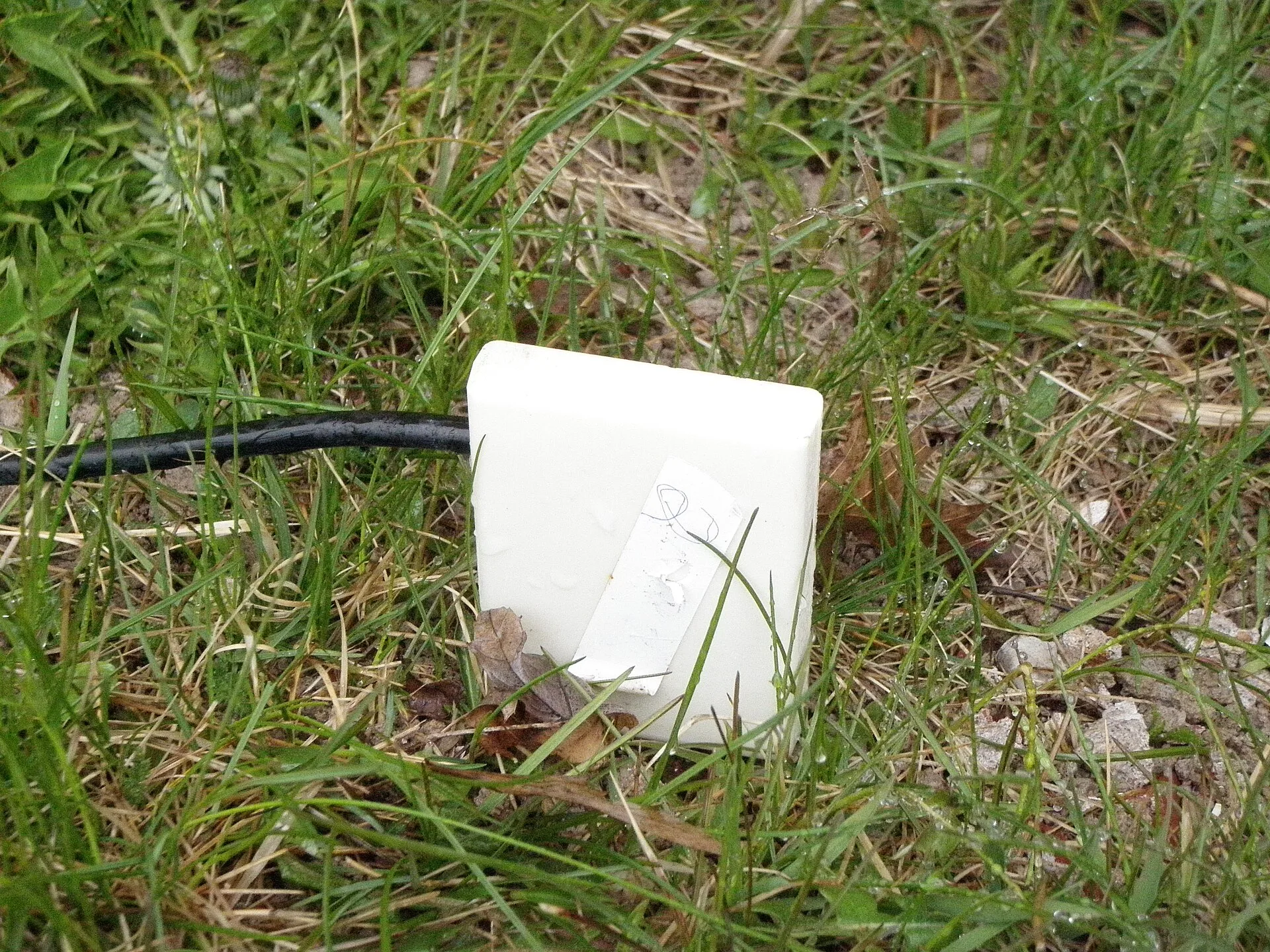
Two instruments, two measurements, one common label. A tensiometer is a water-filled tube with a ceramic tip and a vacuum gauge. It reports soil water tension, the suction a root must overcome, in kilopascals or centibars. A volumetric water content sensor is a dielectric probe, usually capacitive, and it reports the water share of soil volume.
Which measurement you want settles most of the argument. The probes inside a smart controller are almost always the second type. Material on how sensor types behave in clay and other textures is worth reading before you buy.
The criteria that matter
Tensiometer
- What it reports
- Water tension in kPa
- Useful range
- Wet to moist soil, roughly 0 to 80 kPa
- Behavior in clay
- Strong in the band where irrigation decisions get made
- Common failure
- Loses contact as clay cracks; ruined by frost
- Service burden
- Refilling and servicing, often monthly in summer
Volumetric water content sensor
- What it reports
- Water as a share of soil volume
- Useful range
- Saturated through to air-dry
- Behavior in clay
- Depends on a clay-specific calibration
- Common failure
- Drift, salinity effects, cable damage
- Service burden
- Battery and occasional calibration checks
A tensiometer is a decision instrument. A volumetric sensor is a monitoring instrument. Both can be logged, but only one turns straight into irrigate now. Wider choices, including prevention vs monitoring, sit on the same split.
Tensiometer vs volumetric sensor
Tensiometer
- Reports
- Water tension in kPa
- Range
- 0 to 80 kPa
- In clay
- Strong in decision band
- Failure
- Loses contact, frost
- Service
- Monthly refilling
Volumetric sensor
- Reports
- Water share of volume
- Range
- Saturated to air-dry
- In clay
- Needs clay calibration
- Failure
- Drift, salinity, cables
- Service
- Battery, calibration checks
Option by option
Choosing a tensiometer for garden beds on clay is a different decision from choosing a soil moisture sensor. Tensiometers read best in moist soil, which is where clay turns dangerous. Overwatering heavy clay starves roots of oxygen, and the damage builds slowly.
Extension guidance commonly puts the irrigation trigger between 40 and 60 kPa for many garden plants. Treat that as illustrative, not fixed.
Install two, one shallow near the main root mass and one deeper. Backfill with a soil slurry so the ceramic tip keeps contact as the profile moves. Freezing destroys a tensiometer, so pull it before the first hard frost. The USDA soil survey database identifies clay-heavy ground by location, which sets a sensible depth.
Three checks before you trust a reading:
- Confirm the clay fraction at your site and pick a depth from that, not from habit.
- Install in a slurry backfill, then re-check contact after the first dry spell.
- Compare the reading against a hand sample at the same depth until the two agree.
Capacitive sensors report volumetric water content as a percentage. On clay, saturated soil might read in the low 40s, field capacity near the mid 30s, and the wilting point near 20 percent. Those figures are illustrative and move with texture.
Calibration is the catch. A factory curve assumes a generic mineral soil, and clay deviates. A two-point check in a jar of your own dried and saturated soil removes most of the error. Pair the probe with a controller that accepts a soil moisture override, or you pay for data nobody uses.
Where each one wins
The tensiometer is right when you need a defensible trigger for a small, high-value area. A vegetable bed, a cutting garden, or one mature tree in heavy clay all qualify. It also suits anyone who will not open an app.
The volumetric sensor is right when you want logging, remote checks, and a feed into an automatic schedule. If you travel, or the yard has several zones, a trend line beats one reading. Anyone building out that side of a yard should see where outdoor automation ideas are heading, because the probe is one link in a longer chain.
What none of them solve
Both instruments read a tiny volume of soil, and both are blind 18 inches down. Neither measures infiltration, compaction, or drainage, which are often the real trouble in clay. A compacted layer can leave a top probe reading moist while the root zone below stays saturated. A point reading is not a profile.
Neither detects a broken head, a tilted spray pattern, or a zone that ponds at the low end. Projects that went wrong usually failed on those system faults, not on the probe.