Guides
Reading smart yard technology with a sceptical eye, 2027 edition
How smart yard technology is organized in 2027: controller types, the standards behind the labels, where savings figures come from, and what stays local.
Most yards need three or four decisions made well: how much water, when it goes on, how fast a fault surfaces, and who repairs it.
Smart yard technology is the control layer that answers those questions on a schedule, not from memory. This guide covers how the category is arranged in 2027, what sits behind published savings numbers, and where to slow down.
What to take away
- Four decisions come before any productwater, timing, fault alerts, repair.
- Smart gear is a control layer over ordinary pipe, wire, and machinery, so the plumbing and electrical work underneath still decides most of the result.
- Two irrigation controller types carry a federal efficiency label, and each is certified against a different published test standard.
- Savings figures published by federal agencies describe whole product classes and national averages, not a named model on your site.
- Watering restrictions, permit conditions, and rebate terms are local. Your water provider and your state set what you may run and when.
What the category actually covers
Four groups in a smart yard
Water control
- What it includes
- Timers, valves, meters
- Example device
- Shutoff device
- Cannot fix
- Spray direction
Sensing
- What it includes
- Soil, rain, leak inputs
- Example device
- Moisture probe
- Cannot fix
- High pressure
Machinery
- What it includes
- Mowers, powered tools
- Example device
- Robotic mower
- Cannot fix
- Scheduling
Lighting
- What it includes
- Switches, timers, dimming
- Example device
- Motion sensor
- Cannot fix
- Wiring
The category sits on four decision groups. Water delivery asks how much reaches the ground and at what pressure. Scheduling asks when it runs and how long. Fault detection asks how fast a stuck valve or leak is noticed. Service asks who repairs it and under what terms.
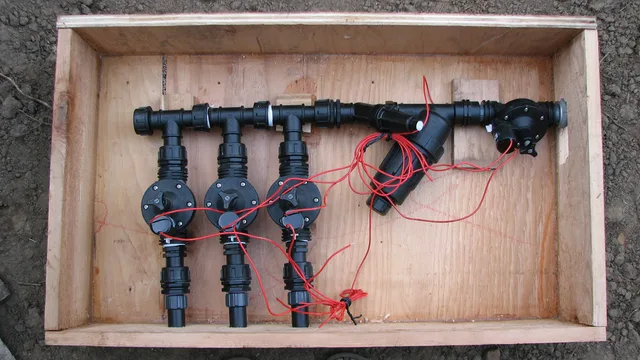
Three layers carry those decisions. The controller is the scheduling brain and usually the only layer with a certification label. Sensors feed it rain, soil moisture, flow, or pressure data. The plumbing layer holds valves, pipe, and wiring.
Almost every buying mistake starts by treating one of those groups as the whole project. A controller cannot correct a sprinkler that sprays a fence, and a soil probe cannot fix pressure that is too high for the nozzle it feeds. It lists the mistakes and the cost each adds.
The federal reference point for the water side is the EPA WaterSense program. Its page on labeled irrigation controllers explains that only two control approaches carry the label, weather-based and soil moisture-based, and that a product using both kinds of data must be certified under both specifications.
The two are the WaterSense Specification for Weather-Based Irrigation Controllers and the WaterSense Specification for Soil Moisture-Based Irrigation Controllers, each with its own test standard.
The same page puts residential outdoor water use at roughly 8 billion gallons a day nationally, with as much as half of it estimated wasted through overwatering and system inefficiency. That is the size of the problem the category aims at.
Where the numbers come from
Scale matters when reading any claim. EPA's household water use summary puts the average American family above 300 gallons a day: about 70 percent indoors, 30 percent outdoors nationally. The outdoor share climbs sharply in drier regions.
Household water use, by the numbers
- 300+ gallonsaverage family daily use
- 70%indoor share nationally
- 30%outdoor share nationally
- 8 billion gallonsresidential outdoor use daily
A yard project in Phoenix is not the same investment as one in Cleveland, so a national average tells you little about either one. That article covers costs for homes and shared buildings.
| Claim you will see | What it usually means | Concrete figure or named standard to check |
|---|---|---|
| "Saves up to X gallons a year" | A modeled class average for a typical home, not a measurement of your yard | EPA puts outdoor residential use near 8 billion gallons a day nationally |
| "Certified" or "labeled" | Independently tested against a published specification, by product class | The WaterSense Specification for Weather-Based Irrigation Controllers, or the soil moisture-based one |
| "Works with any system" | Electrically compatible, which is not the same as hydraulically suitable | 24 VAC output typical of residential controllers, and nozzle psi against static pressure |
| "Adapts to weather" | Adjusts run times from a data source whose local accuracy you should check | Which weather station or evapotranspiration network feeds it, and how far away it sits |
Build it in stages
Stage one is repair and measurement: fix leaks, correct spray direction, confirm operating pressure, and read your own meter. Stage two is control: a labeled controller and the sensor inputs it can actually use. Stage three is expansion into lighting, machinery, or anything that needs new trenching.
Reading a spec sheet is a skill of its own, so start with our guide to comparing published specifications before you shortlist anything. Then read what the installation work involves, because site work, not the device, is where budgets usually move. The first covers specification fields, the second site work and permits.
Common questions
Does a smart controller pay for itself?
Can I keep my existing sprinklers?
Is one brand better than another?
Who decides when I can water?
In this guide
- Smart Yard Technology for Renters: A Reversible Water PathSmart yard technology for renters starts with a reversible water path: surface drip, a battery hose-end timer, simple alarms, and cautious rain-barrel use.
- Planning a smart yard setup: keeping room for expansion laterPlan a smart yard setup that survives expansion: site data first, pressure and pipe capacity, spare conduit and wire, and control that is not locked to one vendor.
- Smart Yard Technology: WaterSense S627 vs. S633Compare WaterSense S627 and S633 for smart yard technology: which controller family each covers, the criteria they test, and what a label cannot prove.
- Hidden costs behind installing yard automation gear at a propertyThe real work behind a smart yard install: the pre-install audit, pressure and coverage fixes, wiring and backflow, and how to check a contractor's certification.
- 3 parts of smart yard technology, explainedSmart yard technology splits into three parts including watering control, sensing, and outdoor power and light, each carrying its own cost drivers.